
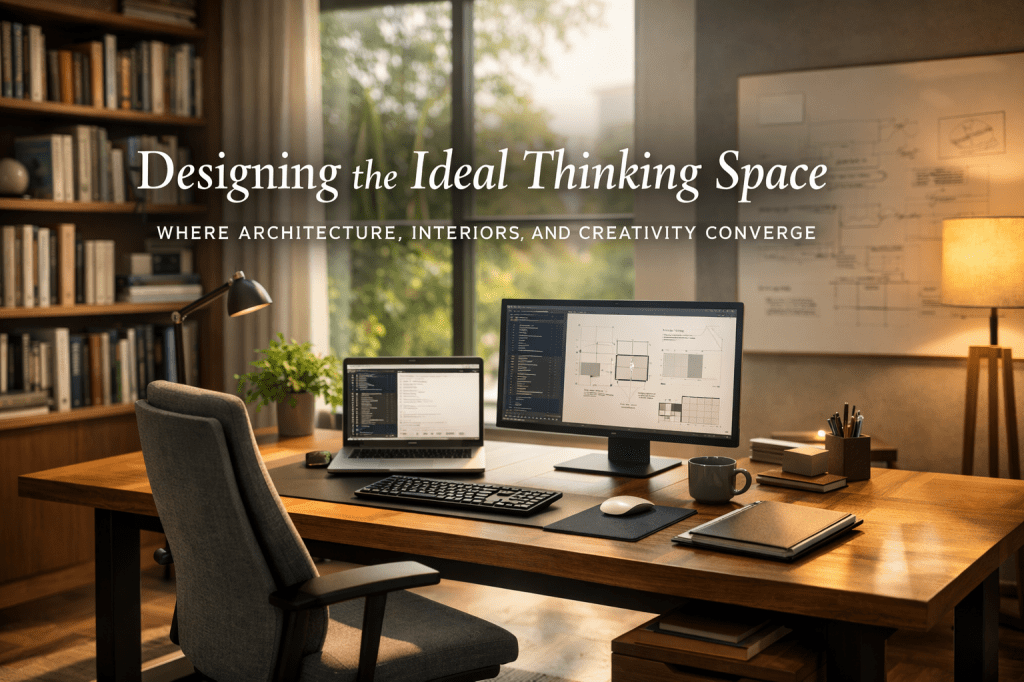
Crafting Environments That Nurture Reading, Writing, and Insight.
You get to build your perfect space for reading and writing. What’s it like?
In every creative journey, space plays a silent yet powerful role. For those of us who work at the intersection of strategy, technology, and creativity, the environment in which we read, think, and write is not a luxury. It is an essential tool. The ideal thinking space is not defined by excess, but by intention, balance, and design intelligence.
At its core, this space is conceived as an architectural expression of clarity. Clean lines, proportional harmony, and an uncluttered layout create a sense of order that immediately settles the mind. Natural light is treated as a primary design element, carefully oriented to bathe the space in soft daylight. This approach reduces visual fatigue while enhancing focus. Openings and windows are positioned to frame the outside world without pulling attention away from inner work.
The interior language is calm and deliberate. A neutral palette of soft earth tones, warm greys, and muted whites establishes a tranquil foundation, while natural materials such as wood, stone, and textured fabrics introduce warmth and sensory depth. Furniture choices emphasize both comfort and refinement. A well crafted desk offers generous working space, a supportive chair accommodates long hours of concentration, and integrated storage ensures tools remain accessible yet visually controlled.
Technology is seamlessly embedded within the environment. Screens, lighting systems, and power solutions are integrated with care, allowing functionality without visual dominance. This balance supports both digital workflows such as research and writing, and analog processes including sketching, journaling, and conceptual mapping. Whiteboards, pin surfaces, and notebooks exist naturally alongside modern devices, encouraging fluid movement between structured thinking and creative exploration.
Lighting is layered and adaptive. Daylight is complemented by ambient lighting for overall comfort, focused task lighting for precision, and warmer accent lighting for reflective moments. This thoughtful hierarchy supports different cognitive states throughout the day, from analytical clarity to quiet contemplation.
Acoustics are equally intentional. The space is insulated from disruptive noise to protect deep focus, while subtle ambient sound or instrumental music can be introduced to maintain creative rhythm. Bookshelves line the walls not as decoration, but as intellectual anchors. They hold works on design, technology, culture, philosophy, and human behavior, reinforcing the idea that strong insights often emerge at the intersection of disciplines.
Above all, the space is designed to manage distraction. It safeguards deep work, encourages long form reading, and allows writing to unfold without urgency. It welcomes pauses and reflection, recognizing that meaningful ideas require time, stillness, and mental clarity to mature.
Ultimately, this is a space that mirrors how creative consultants think and work. It is intentional, human centered, and forward looking. Here, architecture supports cognition, interior design nurtures emotion, and thoughtfully designed environments become catalysts for clarity, insight, and purposeful creation.
Closing Note
Thank you to the platform and the wider engagement for providing a space where ideas can be shared, refined, and strengthened through engagement. The ongoing conversations and contributions continue to inspire thoughtful reflection and meaningful dialogue.
#godemarsempire | @aikinannu

Leave a comment