
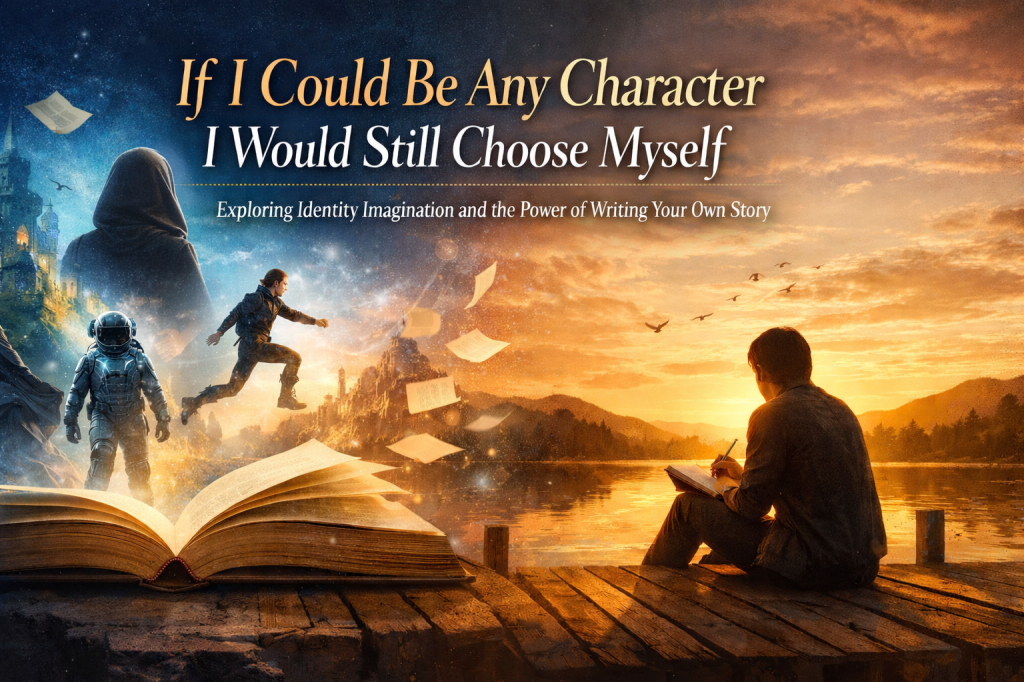
Exploring Identity Imagination and the Power of Writing Your Own Story
The idea of becoming a character from a book or film has fascinated people for generations. Stories have always been more than entertainment. They are gateways into different worlds, different emotions, and different possibilities. When we imagine ourselves as characters from novels or movies, we are not simply escaping reality. We are engaging in a creative exercise that allows us to explore who we are and who we could become.
At its core, becoming a character from a book or film is about stepping into another life. It is about seeing through another person’s eyes, feeling their struggles, and experiencing their triumphs. Characters are often crafted with depth and purpose. They carry values, flaws, ambitions, and lessons that reflect real human experiences. This is what gives them their essence. They are mirrors of humanity, shaped by imagination but rooted in truth.
People are often drawn to the idea of becoming such characters for many reasons. Some admire the courage of heroes who face impossible odds. Others are inspired by the intelligence, creativity, or resilience of certain personalities. There are also those who simply want to escape the pressures of their own lives, even if only in thought. Stories offer a sense of control and clarity that real life sometimes lacks. In a story, challenges have meaning, growth is visible, and endings often bring closure. This makes fictional lives appear appealing, sometimes even more manageable than reality.
There are clear advantages to imagining oneself as a fictional character. It can inspire personal growth and creativity. It can encourage individuals to adopt positive traits such as bravery, kindness, discipline, or determination. It can also serve as a form of emotional relief, allowing people to momentarily step away from their own challenges. However, there are also drawbacks. Constantly wishing to be someone else can create dissatisfaction with one’s own life. It may lead to unrealistic expectations, especially since many fictional narratives are designed to be extraordinary rather than ordinary. Life is not always structured like a story, and comparing reality to fiction can sometimes blur one’s sense of identity.
Personally, I would choose a different path. Rather than becoming a character from a book or film, I would rather write my own story and be the main character in it. Every individual already carries a unique narrative filled with experiences, lessons, struggles, and achievements. These are not scripted by authors or directors, yet they hold as much depth and meaning as any fictional plot. Choosing to be oneself is not limiting. It is empowering.
Everyone is living a story worth telling. The characters we admire in books and films are often shaped by challenges, growth, and purpose. These same elements exist in our lives as well. Instead of wishing to become them, we can learn from their journeys. We can take the positive aspects of their stories and integrate them into our own lives. In doing so, we do not lose ourselves. We enhance who we already are.
In truth, some characters are purely fictional. Their lives are designed for storytelling, not for living. But our lives are real, dynamic, and constantly evolving. We have the freedom to make choices, to grow, and to redefine our paths. This makes our stories even more powerful.
In the end, the question is not about which character we would become. It is about how we choose to live our own story. The most meaningful role we can ever play is being ourselves, fully and authentically, while drawing inspiration from the stories that move us.
Closing Thought
Thank you for being part of this thoughtful and inspiring community. Your engagement keeps these conversations alive and meaningful. Let us continue to share ideas, learn from one another, and write stories that are not only worth telling but worth living.
#godemarsempire | @aikinannu

Leave a comment