
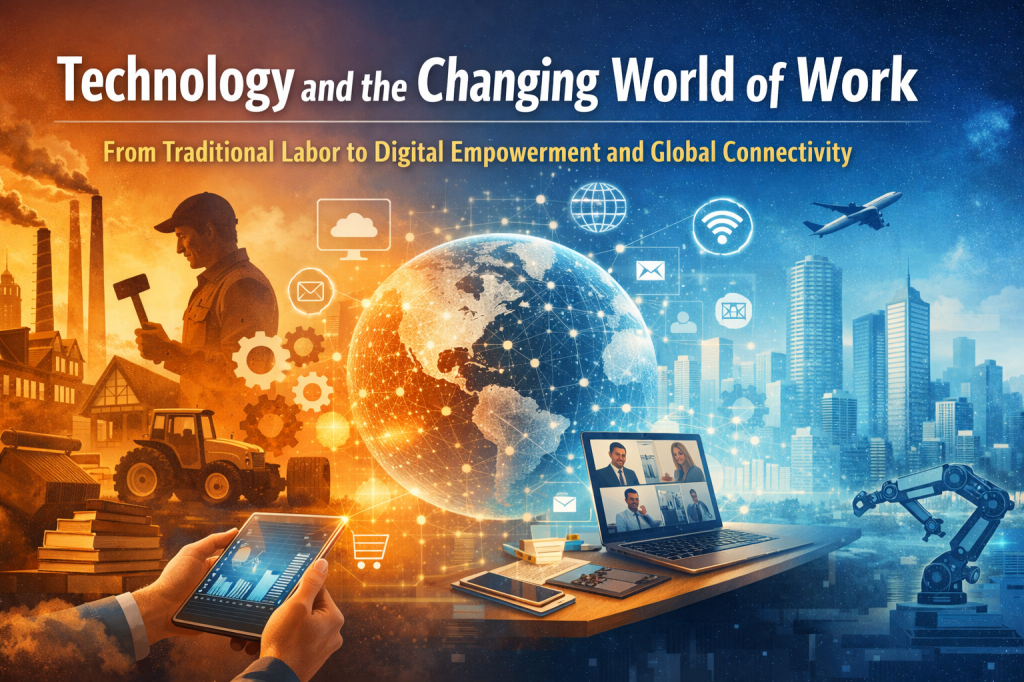
From Traditional Labor to Digital Empowerment and Global Connectivity
Technology, at its core, is the practical application of knowledge to solve problems and improve human life. It goes beyond machines and software. It represents efficiency, innovation, and the constant pursuit of better ways to achieve results. From the earliest tools created by mankind to today’s advanced digital systems, technology has always been central to how we live and work.
Historically, technology began with simple tools used for survival such as stones, fire, and basic farming instruments. These early developments marked the beginning of human progress in shaping the environment. As societies grew, technology evolved alongside them.
- The agricultural era introduced organized farming and food production systems
- The industrial era brought machines that increased production and reduced manual labor
- The digital era connected people across the world and transformed communication and commerce
Each stage of development did more than introduce new tools. It reshaped societies, influenced economic structures, and changed how people contributed to growth and development.
Technology exists in different forms, each playing a unique role in human advancement.
- Mechanical technology powers engines, machines, and industrial systems
- Electrical technology provides energy and drives modern infrastructure
- Digital technology enables communication, automation, and data processing
- Information technology supports data management, networking, and global connectivity
- Creative technology enhances design, media, and branding processes
Together, these forms of technology simplify complex tasks, improve efficiency, and expand human capabilities.
In the world of work, technology has brought significant changes to jobs and careers.
- Tasks that once required long hours of manual effort can now be completed quickly
- Communication has become instant through messaging platforms and virtual meetings
- Work environments have shifted from physical offices to flexible and remote setups
- Skills requirements have evolved, emphasizing digital literacy and adaptability
Technology has also introduced entirely new forms of employment.
- Digital marketing and online branding
- Software development and application design
- Data analysis and business intelligence
- Content creation and online media production
- Remote consulting and virtual services
These opportunities have expanded access to work and allowed individuals to build careers beyond traditional limitations.
From my perspective as an entrepreneur who designs solutions, markets ideas, commercializes businesses, and contributes to enterprise development, technology has played an important role in my work. However, it is accurate to say that it has not necessarily changed what I do. Instead, it has made my work easier and more efficient.
- I can connect with clients regardless of distance
- I can present ideas and execute projects using digital platforms
- Marketing efforts can be launched and monitored in real time
- Business decisions can be supported by accurate and timely data
Technology has removed many of the barriers that once limited productivity and growth. It has allowed me to operate with greater speed, precision, and reach.
In conclusion, technology has transformed the way people work while also creating new opportunities for innovation and impact. It has shifted work from being limited by location and time to being driven by creativity, connectivity, and efficiency. As we continue to embrace technological advancement, it is important to use it wisely to create value, solve problems, and contribute meaningfully to society.
Thank You Note
I sincerely appreciate this platform for providing an opportunity to reflect and share insights on such an important topic. Conversations like this encourage learning, growth, and collaboration within the community. Thank you to everyone who reads, engages, and contributes to making this space impactful and inspiring.
#godemarsempire | @aikinannu

Leave a comment