
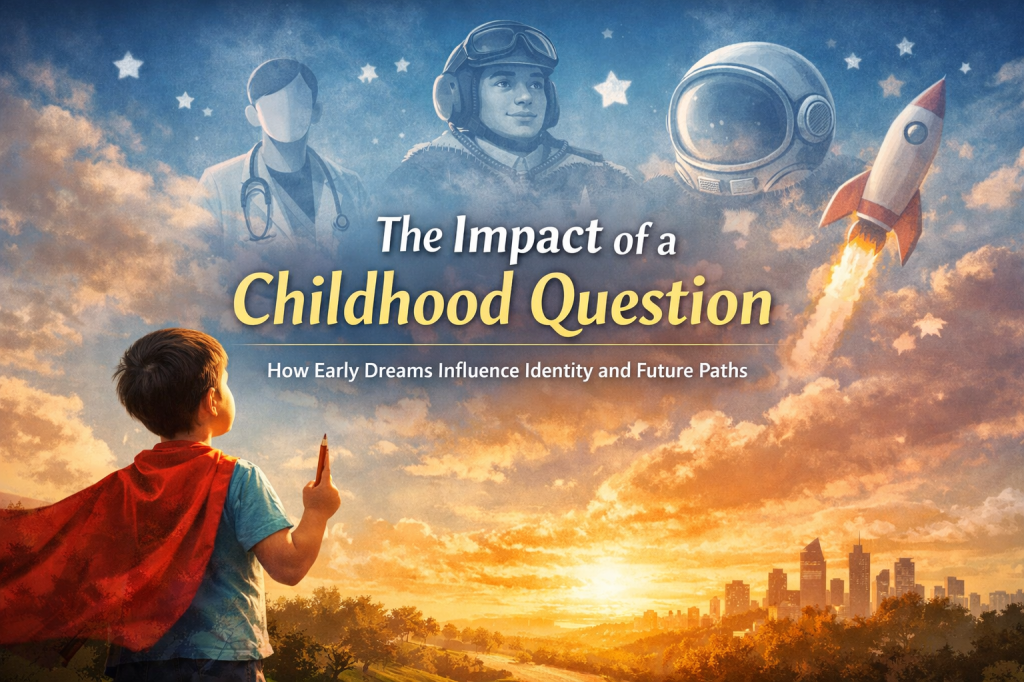
How Early Dreams Influence Identity and Future Paths
Across different cultures and societies, responses to this question often reflect the environment a child is exposed to. In some parts of the world, children are inspired by community heroes such as teachers, doctors, engineers, or leaders. In other contexts, exposure to media and global trends influences aspirations, leading children to dream of becoming celebrities, athletes, or innovators. These differences highlight how deeply environment and exposure shape early ambition.
When asked this question, most children respond with bold and confident answers such as I want to be a doctor, a pilot, a lawyer, or a president. These responses are often filled with excitement and certainty. There is something admirable about that level of confidence, an unfiltered belief that anything is possible.
Over time, an important observation becomes clear. Many children grow increasingly ambitious when faced with this question. They begin to associate themselves with greatness and envision futures where they excel in respected professions. However, what they may not yet understand is that such aspirations are rooted in deep intentionality. Becoming anything meaningful requires more than desire. It demands effort, discipline, perseverance, patience, and consistent growth. The journey from dream to reality is often long and filled with challenges that are not immediately visible.
Personally, my experience at that age was quite different. Whenever I was asked what I wanted to become, I often responded, I do not really know yet. Perhaps it was due to shyness or simply a lack of clarity. While others spoke with confidence, I hesitated. At times, people would laugh at my response, but interestingly, it never bothered me. Even then, there was a quiet sense of acceptance within me.
As I grew older, I began to understand something deeper about myself. Beneath that uncertainty was an inner drive, a desire not tied to a specific title, but to purpose. I realized that I was naturally inclined to guide, to assist others, and to contribute to solving real life problems. It was not about becoming something for recognition, but about becoming someone who adds value.
This realization brings an important perspective. Many children look outward to their peers, role models, or societal expectations to define their aspirations. While inspiration is valuable, it can sometimes overshadow self discovery. True purpose is not always found by imitation but through introspection.
Parents and guardians therefore have a vital role to play. Beyond encouraging ambition, they should help children become self aware by guiding them to understand their strengths, interests, and natural inclinations. Children should be taught to look inward as much as they look outward, to discover who they are before deciding what they want to become.
Because in the end, the question is not just What do you want to be? but also Who are you becoming in the process?
Closing Note
Thank you to this platform for creating a space where reflections like these can be shared. And to everyone engaging with this community blog, your thoughts, perspectives, and interactions continue to inspire deeper conversations about growth, purpose, and the human journey.
#godemarsempire | @aikinannu

Leave a comment